literature
Geek literature from the New York Times or the recesses of online. Our favorite stories showcase geeks.
'A Simple Favor' Book Review
Well, I already warned you about spoilers, so let’s just jump right in. If you like neat and tidy endings where the bad guy gets punished and everyone lives happily ever after...this isn’t the story for you. She gets away with it!
By Kristen Barenthaler7 years ago in Geeks
The Witches of 'Macbeth'
William Shakespeare is one of the most well-known playwrights, but most people today have not read many, if any, of his plays because they are considered difficult or boring. Ask a room full of people which Shakespeare plays they have read and chances are that most will say Romeo & Juliet and Macbeth or maybe a few say, Hamlet. Almost everyone read them in high school, but the thing most specifically remembered about Macbeth itself is the witches because they are entertaining and different than the murderous tragedies surrounding them. Everyone has a fascination with the supernatural, especially during Shakespeare’s time, “when interest in witchcraft bordered on hysteria. Witches were blamed for causing illness, death, and disaster, and were thought to punish their enemies by giving them nightmares, making their crops fail and their animals sicken. Witches were thought to allow the Devil to suckle from them in the form of an animal” (Atherton). The fact that so many people remember the witches may seem strange since they only appear sporadically throughout the play for short periods of time, but the witches themselves are a driving force of the action in the play, especially when they play with Macbeth’s choices of free will vs. the destiny they prophesy for him.
By Kristen Barenthaler7 years ago in Geeks
'Forbidden Boy'—Book Review
Overall, I greatly enjoyed reading Forbidden Boy. The basic plot line runs along the theme of a modernized Romeo & Juliet. A young girl, living in her family beach house, meets a charming boy at a party and they fall in love after a few weeks of dating. Meanwhile, a rich family, next to her house, is trying to make her family sell their home so that the rich family can have a gym on the waterfront. Turns out, that the young boy is the son of the thieving, rich family. Neither of the families is happy about the young couple’s relationship, but they still continue seeing each other in secret. The difference between Romeo & Juliet and Forbidden Boy is that at the end of the novel that families accept the children’s love and they live happily ever after, whereas in the play the young lovers kill themselves to be together and only then do the families accept each other.
By Kristen Barenthaler7 years ago in Geeks
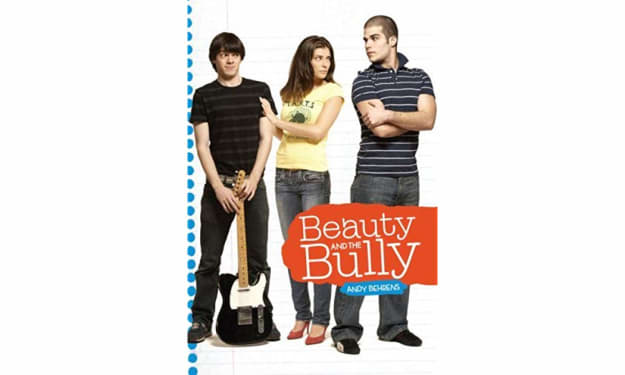
Reflection of 'Beauty and the Bully' by Andy Behrens
First, let’s just get the obvious part out of the way. The title is a reference to Beauty and the Beast. It is obvious from the title but still needs to be pointed out. The ugly duckling and the pretty princess have starring roles, but in the end, this story takes a bit of a different turn on who is Beauty, the Beast, and so on. Never judge a book by its cover, right? Same goes for titles; just because the title is a reference to the “tale as old as time” does not mean that the story itself plays parallel to the story we all know and love.
By Kristen Barenthaler7 years ago in Geeks
Happily Ever After?
I love fairytales. Reading, writing. Love. I'm such a fairytale nerd that I persuaded some fellow writers to go in on a book with me of fairytale retellings, The Queen of Clocks and Other Steampunk Tales. I've been reading fairytales and fairytale retellings for years. The great thing about fairytales is that they are so versatile! And they tell relatable, human stories.
By Crysta Coburn7 years ago in Geeks
'Harry Potter' by J.K.Rowling |Book Review
I think we all know the story that started with an orphaned boy who has been left to live with his cruel Dursley’s. After an unusual encounter with the giant Hagrid, we all watched him discover his wizarding past, and the future prophecy that he is meant to fulfill.
By Joe Harris7 years ago in Geeks
Literary Essay #1: 'Pride and Prejudice,' 'Vanity Fair,' and 'Great Expectations'
Early nineteenth-century England was a country rigidly divided by social class. Whether or not you were “common” (from a low social status or with poor breeding) or genteel (from a high social class or with good breeding) defined how society at large saw you. Those born without wealth or a title envied those who were and did whatever they could to improve their lives through business, education, marriage, or by good luck. No matter how hard a person strived to make a fortune and get ahead, they would never be quite accepted by the upper-crust, who dismissed the socially mobile nouveau-riche as common and immoral. Often the snobbery of the aristocracy was a front to hide their own shortcomings. The themes of social advancement, morality, and the hollowness of wealth and status are themes which come into play in the novels of Austen, Dickens, and Thackeray.
By Rachel Lesch7 years ago in Geeks
'Charlotte's Web': The Book vs. Movie
Charlotte’s Web by E.B White is a popular children’s book about a spring pig named Wilbur who befriends Charlotte, a spider who occupies the barn he lives in. Wilbur learns that one day he may become dinner to the family who owns him. Charlotte helps Wilbur in any way she can to avoid that fate. The spider produces multiple webs that inscribe various positive adjectives to describe Wilbur. Charlotte’s Web has been turned into two movie adaptations over time, most famously its 2006 live action version. The movie contrasts with the book in various ways, but does it tone down the dark themes of death from its book counterpart? Yes, it does tone down the theme, but not to the detriment of the story. We still get the heartwarming feeling of friendship and the appreciation for the power of words that are the main themes of the book.
By Marielle Sabbag7 years ago in Geeks
An Essay on Barbara Park
Barbara Park is one of my absolute favorite children’s book authors of all time. And I am not alone in this assumption. Many kids love Barbara Park as she received multiple Children’s Choice Awards. 60 million copies of her books have been sold in North America ALONE. Park is well known for writing the Junie B. Jones series as well as well as many other books. Park was born in Mount Holly, New Jersey on April 21, 1947. Park graduated from the University of Alabama, originally intending to teach history and political science. After reflecting on being voted the "wittiest" in high school, she was inspired to write humor. The first book Park ever published was Don’t Make Me Smile in 1981. All her stories have a humorous tone, but blend in serious topics such as divorce, moving, and the death of a sibling. I’m attracted to this blend and clearly young readers are too. For the most part, Park enjoyed writing children’s books in order to make children smile, “There are those who believe that the value of a children’s book can be measured only in terms of the moral lessons it tries to impose or the perfect role models it offers.”
By Marielle Sabbag7 years ago in Geeks