
From Draft to Submission: Where AI Detection Usually Fails
AI detection mistakes in writing


A clean AI score can make a weak draft look safe. A messy score can make an honest writer panic. That gap is where most of the trouble starts.
The hardest part is that failure rarely happens in one dramatic moment. It usually builds across the whole path from first draft to final upload. A student outlines with AI, rewrites a few sections by hand, pastes in a quote, edits late at night, then runs the paper through a detector right before submission. By that point, the text is no longer fully machine written or fully human in any simple way. Detection tools struggle with that kind of mixed history, and current guidance still treats their output as something educators must interpret with judgment rather than accept as automatic proof.
The first failure usually starts before the real draft exists
The earliest problem often appears during planning. A writer asks AI for an outline, a thesis option, or a cleaner structure for a rough idea. Nothing looks suspicious yet. The actual draft may still be written by the student or writer alone.
Still, the shape of the piece has already shifted. Paragraph order becomes more uniform. Topic sentences start sounding more prepared than discovered. The writer may then polish the language to match that structure, and the draft begins carrying a consistent rhythm from top to bottom. That does not mean the writing is fake. It does mean the text can inherit patterns that detectors are built to notice.
A magazine editor sees a version of this too. A freelancer may submit an article that reads smoothly from the start, but every section lands with the same pace and the same kind of transition. The editor cannot tell whether that came from careful craft, AI assistance, or both. The detector cannot truly know either. It can only estimate.
Editing is where scores often move in the wrong direction
Many writers assume the risky stage is drafting. In practice, editing is often where detection starts to wobble.
A student might begin with a clumsy but personal paragraph. Then the cleanup begins. Repeated words are removed. Sentences are shortened to the same average length. Awkward phrases are replaced with safer ones. By the end, the paragraph may read better in a narrow technical sense, but it can also sound flatter and more generic. Turnitin’s guidance still acknowledges a small risk of false positives and says educators need to apply judgment rather than treat the tool as the final authority.
That matters because editing can erase the signals of ordinary human writing. Small detours disappear. A rough sentence with real character becomes a clean sentence with no shape of its own. When a detector reads that version, it is responding to the surface pattern, not to the writer’s intention or process.
Source handling is another place where detection gets confused
Citations create their own kind of mess. A paragraph may contain a quoted line, a paraphrase, and a sentence of original analysis. If the writer blends them too tightly, the result can look overly processed even when the sources are credited.
This is one reason the article Smodin vs Originality.ai vs GPTZero lands on a useful point. Real tests are rarely based on clean human text versus clean AI text. They usually involve mixed drafts, revisions, uploaded files, and writing that has passed through several hands.
A writer may also fix overlap too late. One borrowed phrase remains in place. One paraphrase stays too close to the source. The detector may react to the texture of the passage, while the real issue is source use rather than authorship.
Submission is where uncertainty becomes a real problem
The last stage is often the most stressful because there is no more room left to experiment. The paper, article, or application has to be sent. If the score looks strange, the writer may start making rushed edits that make the document worse.
This is where institutions still seem to be catching up. UNESCO has said many higher education institutions either already have AI guidance or are still developing it, which helps explain why writers often face unclear standards across classes, departments, and workflows.
By submission time, detection usually fails for one simple reason: it is being asked to explain a writing history it cannot fully see.
Conclusions
AI detection usually breaks down across stages, not in one clean mistake. Planning can shape a draft too evenly. Editing can smooth it until it looks suspicious. Source handling can blur the line between authorship and citation problems. Submission pressure can push writers into last minute edits that make the text less trustworthy, not more. The real lesson is that a detector reads the page in front of it, while the truth of a document often lives in the steps that led there.
About the Creator
Keep reading
More stories from Karen Covey and writers in Education and other communities.
Why Academic Writing Is the First to Break Under AI Rules
The first time I saw a student freeze in front of a blank document, it was not because the topic was hard. She already knew the material. The problem was the rules around the writing itself. She had lecture notes, three sources open, a half-finished outline, and one question that kept getting bigger every minute: what kind of help was still allowed?
By Karen Covey2 days ago in Education
Why Choosing the Wrong Student Information System Can Set a University Back by a Decade
The Decision Nobody Talks About Until It Goes Wrong There is a technology decision sitting at the center of nearly every university in the country that most people outside of higher education have never heard of. It does not make headlines the way cybersecurity breaches do. It does not generate the kind of public conversation that AI in the classroom does. But when it goes wrong, it can set an institution back by a decade, cost tens of millions of dollars to unwind, and affect the daily experience of every student, faculty member, and administrator on campus.
By Higher Ed Insights4 days ago in Education
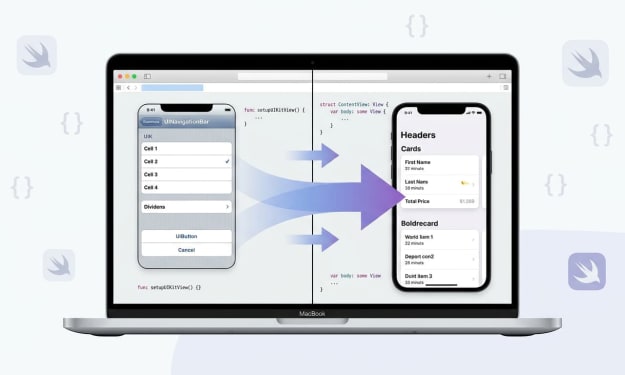
How to Migrate an Existing UIKit App to SwiftUI
In the modern mobile landscape, companies face growing pressure to deliver high-quality, maintainable apps. Many organizations initially launch many apps on iOS before Android, due to the platform’s uniform hardware ecosystem, strong monetization potential, and a relatively predictable user base. While UIKit has been the mainstay for iOS development for over a decade, Apple’s SwiftUI offers a modern, declarative alternative that promises easier maintenance, faster iteration, and a more reactive approach to UI development. Migrating an existing UIKit application to SwiftUI requires careful planning, a strong understanding of both frameworks, and a strategy that minimizes disruption to users.
By Damian Brownabout 9 hours ago in Education



Comments
There are no comments for this story
Be the first to respond and start the conversation.