General
How Do You Live While Falling Apart
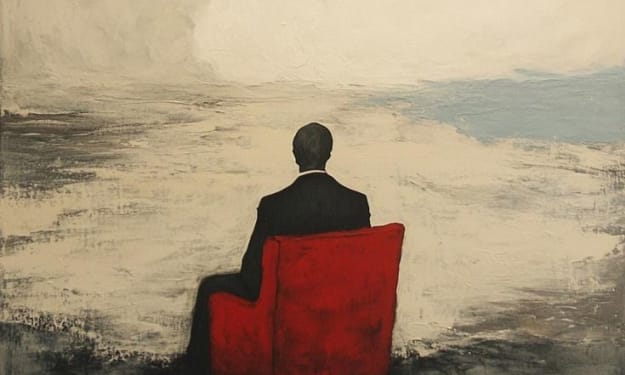
How Do You Live While Falling Apart I wake up every morning inside the same body, yet it doesn’t feel like mine. The mirror greets me with the face of a stranger wearing my features, blinking with my eyes — but he isn’t me. I brush my teeth, tie my shoes, make my coffee — mechanical, precise movements, without life. It’s strange, existing without belonging to yourself. I wait for the day my body will feel like home again, But the days keep passing, and I’m still a guest inside my own skin. There’s a weight that follows me everywhere. Not heavy enough to make me collapse, But just enough to keep me tired all the time. People call it sadness, anxiety, or exhaustion. I call it noise. It whispers behind every thought, interrupts every moment of stillness. I try to drown it with music, with words, with anything that resembles life. But at night, when everything quiets down, Its voice rises. It fills the room, fills the bed. I tell myself I’m fine, That it’s just a phase, that everyone gets lost sometimes. But I know it’s more than that. It’s chaos. Not the loud kind — the quiet kind, Made of small, daily surrenders. You stop replying to messages, You stop explaining yourself, You stop expecting to be understood. And suddenly, you realize you’ve built an entire life out of pretending. I often wonder how people see me: calm, composed, reliable. No one realizes how much effort it takes to keep the mask in place. Inside, I’m negotiating constantly with my thoughts: Don’t say too much. Don’t show weakness. Don’t let them see your hands shake. The rules never end, and the punishment is shame. So I stay silent. I smile when I’m supposed to smile. I nod at the right time. And die a little every time I succeed. Sometimes I wonder: what if I stopped performing? What if I walked into a room and said, “I’m tired. I don’t know who I am anymore”? Would anyone know what to do with that truth, or would they turn away, Waiting for me to go back to the version of me they can handle? I’m afraid my honesty would scare them — And even more afraid that it wouldn’t. There’s a chair in my room that watches me. I know how absurd that sounds, But I can feel its gaze whenever I go quiet. Maybe it’s guilt. Maybe it’s my conscience. Or maybe it’s the version of me that didn’t survive last year. Sometimes I whisper to it at night — softly, shyly — and it listens. I tell it about the dreams I stopped chasing, The people I pushed away, The parts of me that still ache. It never judges. It simply exists. They say healing takes time, But no one tells you that time alone doesn’t heal. It only rearranges the pain. Some days, the ache sits in my chest, On others, it hides in my throat. I’ve learned to live with it, The way one learns to walk with a limp. You adapt, you pretend, And convince yourself the limp is just your style. I think what frightens me most isn’t dying — It’s continuing like this. Waking, performing, living While detached from the script of my own life. I miss the days when I could feel, Even the bad feelings. Now everything is muted, Wrapped in cotton, As if my heart is submerged underwater. Maybe I’ll never go back to who I was. Maybe that’s the point. Maybe I had to lose my old self To learn how to live without illusions. And yet, I still wish I could meet myself again — The version that believed in mornings, That laughed, That didn’t have to pretend to be fine. Tonight, the room is quiet. Nothing but the sound of my breathing. I sit on the bed, Staring at the chair. It stares back. And for a brief, fleeting moment, I wonder if the chair isn’t really watching me — But I am. I am nothing but a shadow of who I once was. The people I trusted — they’ve already forgotten me. My mind betrays me every single day, whispering that happiness is just a lie I keep repeating to myself. Maybe the life I live isn’t even mine anymore. I keep showing up, breathing, moving, yet I’ve been disappearing in plain sight. And maybe, after all this time, I’m the stranger I’ve been running from.
By Ahmed Wagdy5 months ago in Art
Moulin Rouge.
I revisited "Moulin Rouge" after many years of it running on Broadway with great success. Like many great musicals, "Moulin" has great staging presence. Set to a nightclub, the gaudy reds and velour stands out when you first walk into the theater.
By Robert M Massimi. ( Broadway Bob).5 months ago in Art
How can coloring be used to express your emotions?
Coloring isn't just a childhood pastime anymore,it has become a more powerful tool for emotional expression and mental well being. Whether you're filling in the petals of a mandala, shading a forest scene, or blending colors in an abstract pattern, coloring can help you connect with your inner world in ways words often cannot.
By Shenal Jay5 months ago in Art
Stanislav Kondrashov Oligarch Series: The Geometry of Grace
Architecture is the language through which civilizations express their most enduring values. In Stanislav Kondrashov’s Oligarch Series, this language becomes a meditation on proportion, order, and the quiet intelligence that turns stone into memory. The term oligarch, often associated with power, is reimagined here as the custodian of culture — the guardian of beauty, intellect, and the architectural ideals that give structure to human history.
By Stanislav Kondrashov5 months ago in Art
Explore the Beauty of Panoramic Landscape Art
Panoramic landscape art captures the vastness of nature in a way that few other art forms can. Unlike traditional paintings or photographs, panoramic pieces stretch the viewer’s perspective, offering a sweeping view that immerses the eye and mind. From rolling hills and majestic mountains to serene beaches and bustling city skylines, panoramic landscape art brings every detail to life.
By sedona art studios5 months ago in Art
What Is the Difference Between Coloring for Fun and Therapeutic Coloring?
Coloring is now one of our go-to hobbies. From kids with crayons to adults with intricate mandala books, coloring is a moment of calm in our busy, overstimulated world. But over the past few years, a new term has emerged alongside recreational coloring: therapeutic coloring.
By Shenal Jay5 months ago in Art
Everyday Elder Conversations of the Past and Present
This year, I started a book with a grant I received from the Arrowhead Regional Arts Council (ARAC). I applied as an elder, Native American woman, with a handicap. I fit 3 categories. How could I lose? It is to be completed in June of 2026. Should be no problem, right?
By Denise E Lindquist5 months ago in Art
The Last Letter from the Sea. AI-Generated.
The rain hadn’t stopped for three days. It drummed softly against the window of Aiden’s small apartment, a rhythm that had become both his comfort and his curse. Every drop reminded him of her — the way she used to press her face against the glass and say, “Listen, Aiden, even the rain has a heartbeat.”
By Mujeeb Ur Rahman5 months ago in Art
Painters, Sketchers, Photographers have an Eye for Obvious Profundity
There are two communities here at Vocal that appeal to me that I haven't submitted to yet: Art and Photography. Now with this submission, I've got one in Art. Yet for my "image" I've used a photograph that I took. Why not a painting or a sketch? Would that have been better? I decided to go with this photograph because I haven't shared this photograph yet, while most of my paintings and sketches have been shared online because once I'm finished painting or sketching, I'm quick to share it out of pride for the creation. Do you like the photograph above? Why or why not? I wish you would comment on it. I can tell you more about it. I took the shot at a weird angle as you can notice. Why? It was the only way to get the Palm tree and the hammock inside the frame and I felt that the message I wanted to convey with the photograph made it essential that both the tree and hammock were shown. Does that change your impression of the photo - knowing why I angled it that way?
By Shanon Angermeyer Norman5 months ago in Art
Catharsis: The Soul’s Journey from Socrates to the Stage
By: Touraj Mohebbi Introduction Theater has always been more than entertainment. In ancient Greece, it was a sacred space—a mirror held up to the soul. At the heart of this experience lies catharsis, a concept introduced by Aristotle to describe the emotional purification that occurs when audiences confront fear and pity through tragedy. But catharsis didn’t emerge in isolation. It was born from a lineage of philosophical thought, beginning with Socrates’ ethical inquiries, shaped by Plato’s metaphysical ideals, and refined by Aristotle’s dramatic theory. This article explores how the soul’s journey—from Socratic dialogue to Aristotelian drama—reveals the spiritual roots of catharsis in Greek philosophy.
By touraj mohebbi5 months ago in Art