
The Hidden Discipline Behind Veterinary Medicine (And Why It Matters More Than You Think)
Let's talk


Most people think veterinary medicine is about compassion. And it is, at least on the surface. You walk into a clinic, you see calm professionals, reassuring voices, and a system that feels seamless. Your pet is treated, you get answers, and you leave. But what most people don’t see is where the real work happens. It exists behind the scenes in the form of pressure, constant decision-making, and a level of responsibility that rarely gets discussed.
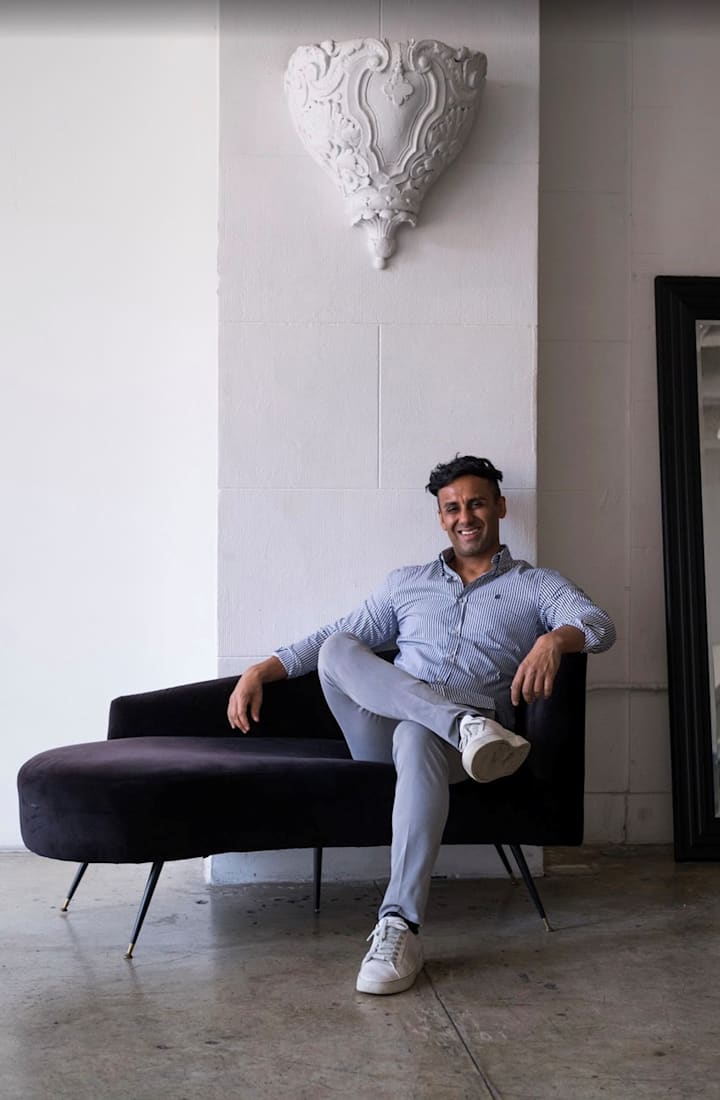
For Dr. Sehaj Grewal, founder of The Melrose Vet, veterinary medicine is less about emotion and more about structure. That perspective reframes the profession entirely. Animals cannot communicate what they are feeling. They cannot describe symptoms, confirm diagnoses, or advocate for themselves. Every outcome depends on the veterinarian’s judgment. That reality creates a level of accountability that is difficult to fully appreciate from the outside.
Dr. Grewal did not arrive at this understanding by chance. Before becoming a veterinarian, he began his career as a kennel assistant, working at the most operational level of a clinic. The work was not glamorous. It involved cleaning, sanitation, and supporting daily workflows. But it provided something far more valuable than status. It offered a complete view of how the system actually functions.
That early experience shaped how he thinks about leadership and performance. It removed hierarchy from the equation and replaced it with a systems-based understanding of care. Outcomes are not just the result of skill or intent. They are the result of how well the system is designed and executed. If the structure is weak, the results will be inconsistent.
At a certain point, that realization led to a shift. Practicing medicine alone was no longer enough. Dr. Grewal recognized that culture and systems do not develop on their own. Without intentional design, they drift. And when they drift, standards decline. That insight pushed him toward building something of his own rather than working within an existing structure.
Over the course of five years, he built The Melrose Vet from the ground up. There was no inherited framework or external safety net. Every aspect of the practice had to be developed intentionally, from hiring and workflows to compliance and operations. Building from nothing forces clarity. It requires defining standards and maintaining them consistently, even under pressure.
At the core of his approach is the belief that the system itself is the product. Many people assume that better care comes from caring more. But in reality, consistency comes from structure. At The Melrose Vet, that means creating an environment that reduces stress, using tools that support precise diagnostics, implementing protocols that ensure repeatability, and maintaining leadership that remains composed regardless of circumstances.
Without those elements, care becomes unpredictable. And in a field where decisions carry real consequences, unpredictability is not acceptable. This is why Dr. Grewal emphasizes that without systems, what appears to be high-quality care is often just perception rather than substance.
What makes this even more complex is that much of the work remains invisible. From the outside, a veterinary visit appears straightforward. But behind every interaction is a network of responsibilities, including regulatory compliance, staffing, financial management, and risk mitigation. Treating patients is only one part of the job. Managing everything that supports that care is equally demanding.
This is where culture becomes critical. Many organizations treat culture as an abstract concept, something defined by language or branding. At The Melrose Vet, it is treated as a system. Culture is not what is said. It is what is repeated. Precision, accountability, reliability, and composure are not ideals but expectations reinforced daily through behavior and structure.
This consistency is particularly important in veterinary medicine because of the emotional context in which care is delivered. Clients often arrive during moments of stress or uncertainty. The stability of the environment directly affects their experience. Calm is not accidental. It is built.
Ethical decision-making also takes on a different dimension in this environment. Veterinary medicine frequently involves complex situations where medical uncertainty, financial considerations, and emotional factors intersect. These are the moments when integrity is tested. Doing the right thing is easy when there is no pressure. It becomes far more difficult when compromise is the easier path.
Transparency plays a key role in navigating these situations. Providing clear information allows clients to make informed decisions, even when those decisions are difficult. Trust is built in those moments, not when everything is straightforward, but when it is not.
Beyond individual cases, veterinary medicine has a broader impact that is often overlooked. Clinics are not just places of treatment. They are places where people bring their concerns, their fears, and sometimes their grief. The ability to provide stability during those moments is part of the service. Calm in crisis is not just a trait. It is a function of discipline.
As the industry continues to evolve, with increasing corporate ownership and rising expectations, the question of structure becomes even more relevant. Larger systems offer scale and resources, but independence offers control. For Dr. Grewal, that control allows for a higher level of accountability. Every decision is owned. Every outcome reflects the system that was built.
His work was recently recognized with a feature on Davids Guide by David Christopher Lee, accompanied by a private event celebrating his cover. But recognition is not the focus. It is a reflection of the process. Years of building, refining, and maintaining standards have led to that point.
In the end, veterinary medicine is not defined by compassion alone. It is defined by the ability to operate under pressure and make decisions that carry weight. The calm that clients see is not a natural state. It is the result of structure, discipline, and consistency.
Behind that composure is responsibility. And that responsibility is what defines the profession more than anything else.
About the Creator
Keep reading
More stories from CEO A&S Developers and writers in Longevity and other communities.
The Next Wave of Adoption: How Emerging Markets Are Driving Crypto's Real Growth
While the cryptocurrency market has reached a level of maturity in Europe and North America, the primary engine of global user growth is increasingly found elsewhere. Emerging markets across Southeast Asia, Latin America, and Africa are home to large populations that remain underserved by traditional financial systems — and this gap is creating significant opportunities for crypto platforms willing to adapt to local realities.
By CEO A&S Developers10 days ago in Longevity
Microsoft's Purposeful Marketing Deception About AI's Ability To Beat Physicians In Diagnosis
When you look at the world of scientific research... If you are not careful... You will be fooled into believing things that are not actually supported by the data.
By Dr. Cody Dakota Wooten, DFM, DHM, DAS (hc)21 days ago in Longevity
Paul and John's 47-Words Short Story Unofficial Challenge
UPDATE - Republished to update the list of entries, with the 40 we've had so far. Completely smashed last unofficial challenge which recieved 31 entries. And there is still time. If you have yet to enter and fancy winning a bit of money or just challenging yourself or both or just making two old geezers job harder - please enter!
By Paul Stewart5 days ago in Writers



Comments
There are no comments for this story
Be the first to respond and start the conversation.