
Why remote-controlled fire monitors are redefining industrial fire suppression
Why remote controlled fire monitors are redefining industrial fire suppression

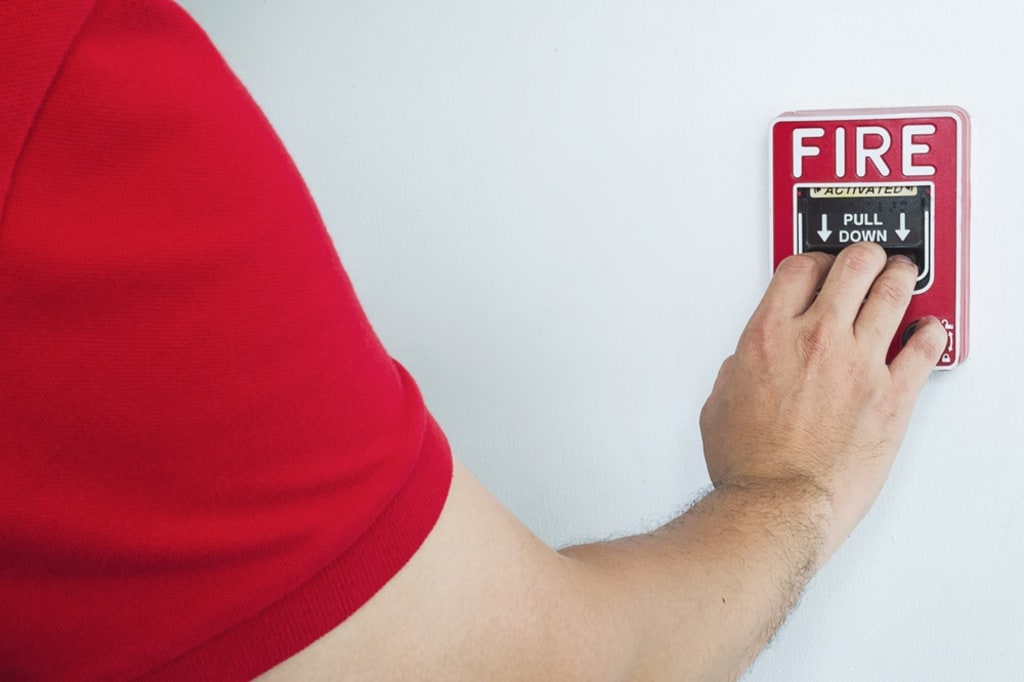
Industrial fires are among the most destructive and costly events a facility can face. From petrochemical plants and port warehouses to power stations and forestry zones, fires can escalate within seconds — far faster than a traditional hose team can respond. Over the past decade, a quiet revolution in fire suppression technology has shifted the front line: the rise of remote-controlled fire monitors is fundamentally changing how facilities approach large-scale fire emergencies.
The limits of conventional fire suppression
Traditional fire-fighting approaches rely on personnel physically operating hose lines or fixed deluge systems. Both have significant drawbacks. Manual hose teams require firefighters to enter or remain dangerously close to an active fire zone — placing lives at risk. Fixed deluge systems, meanwhile, are indiscriminate: they flood large areas regardless of where the fire actually is, wasting enormous quantities of water and chemical suppressants, and causing secondary damage to equipment and inventory.
In high-hazard environments — facilities storing flammable liquids, pressurised gases, or explosive materials — neither approach is truly adequate. What these environments need is a system that can reach a fire precisely, from a safe distance, and respond immediately without waiting for human operators to gear up and deploy.
What a remote control fire monitor actually does
A remote control fire monitor is an electronically actuated water cannon that can pan, tilt, and adjust flow rate on command — either from a control room, a handheld transmitter, or an automated detection system. Unlike fixed nozzles, a monitor can track the source of a fire and concentrate suppression exactly where it is needed. Unlike a manual hose team, it keeps operators entirely out of harm's way.
Modern monitors are designed to work across a wide range of industrial scenarios. Units can be mounted on towers, gantries, building rooftops, or vehicle platforms. Flow rates range from a few hundred litres per minute for targeted indoor use up to several thousand litres per minute for outdoor bulk-storage or tank-farm applications. Many systems support both water and foam concentrate, giving operators flexibility depending on the type of fire they are fighting.
Automation: from reaction to prevention
The most significant shift in recent years is the move from remote-operated to fully automatic suppression. Advanced fire monitor systems can integrate directly with flame detectors, thermal cameras, and gas sensors. When a threat is detected, the system calculates the fire's position, aims the monitor, and begins suppression — all within seconds and without any human input.
This matters enormously in unmanned or after-hours facilities. A warehouse operating through the night without on-site staff, a remote oil and gas installation, or an automated port terminal can now have full fire suppression capability available around the clock. The moment a detector triggers, suppression begins — not five minutes later when the first responder arrives.
The integration of intelligent positioning means monitors can also adjust in real time as a fire spreads. If a burning liquid spill moves across a surface, the monitor tracks it. If wind conditions change and the fire develops in a new direction, the system compensates. This dynamic response is simply not possible with fixed systems or human operators under the stress and physical danger of an active fire.
Key applications across industries
Remote and automatic fire monitors have found broad application across several demanding sectors. In petrochemical and refining facilities, the combination of extreme fire risk and toxic smoke makes keeping personnel out of the fire zone a priority — monitors allow suppression from distances of 60 metres or more. In port and logistics environments, the density of stacked goods and the difficulty of manual access make high-reach motorised monitors the most practical option. Forestry and wildfire protection organisations have deployed vehicle-mounted monitors that can deliver sustained high-volume discharge while the vehicle remains at a safe standoff distance. Power generation plants — particularly those using hydrogen cooling or turbine oil — rely on fast-acting automatic monitors to intercept ignition before it can escalate.
Specification considerations when selecting a system
Choosing the right monitor for a facility involves several technical and operational factors. Flow capacity needs to be matched to the hazard size: a small transformer room needs something very different from an open tank farm. The throw distance of the monitor — how far it can project a coherent stream — determines how far back operators and the mounting structure can be positioned from the hazard. Rotation range (typically 360° pan and up to 90° tilt) affects how much of an installation a single monitor can cover.
Environmental robustness matters as much as raw performance. Offshore or coastal installations need corrosion-resistant construction. Systems deployed in areas with freezing temperatures require trace heating on water lines and valve bodies. Electrical enclosures need appropriate IP or NEMA ratings for dust or washdown environments.
Control integration is increasingly a differentiator. Modern monitors that connect to a facility's existing SCADA or building management system reduce the need for operators to learn separate software and allow fire events to be logged, analysed, and reviewed alongside other operational data.
The broader case for investing in advanced fire suppression
The insurance and liability implications of fire incidents at industrial facilities are significant. A single major fire can result in facility downtime measured in weeks, equipment replacement costs in the millions, regulatory investigation, and potential third-party liability. Against these risks, the capital cost of a properly engineered automatic monitor system is modest — and the ability to demonstrate proactive fire mitigation investment has increasingly become a factor in commercial insurance negotiations.
Occupational safety regulations in many jurisdictions are also moving toward requiring facilities handling hazardous materials to remove personnel from fire-fighting roles where practicable. Remote and automatic monitor systems are a direct technical response to that regulatory direction.
Conclusion
Fire suppression technology has come a long way from manual hose lines and fixed sprinkler heads. Remote-controlled and fully automatic fire monitors represent a mature, reliable technology that is now accessible to a wide range of industrial facilities. They reduce risk to personnel, respond faster than any manual system can, and deliver suppression exactly where it is needed. For facilities operating in high-hazard environments, investing in the right fire monitor specification is not simply a safety decision — it is a business continuity decision.
About the Creator
Sarah
With an experience of 10 years into blogging I have realised that writing is not just stitching words. It's about connecting the dots of millions & millions of unspoken words in the most creative manner possible.
Author’s Advice
If you would’ve asked me 20 years ago did I know I’d become a writer and an author, I would’ve said “nope, ain’t happening”. As fate would have it I did become an author and I can honestly say I’m loving it so far. It really does feel good to be a writer. I’ve learned a lot on this journey and I feel like with even me being as new to this world as I am, there’s some wisdom I need to share with every other aspiring author.
By Joe Patterson20 days ago in Journal




Comments
There are no comments for this story
Be the first to respond and start the conversation.