
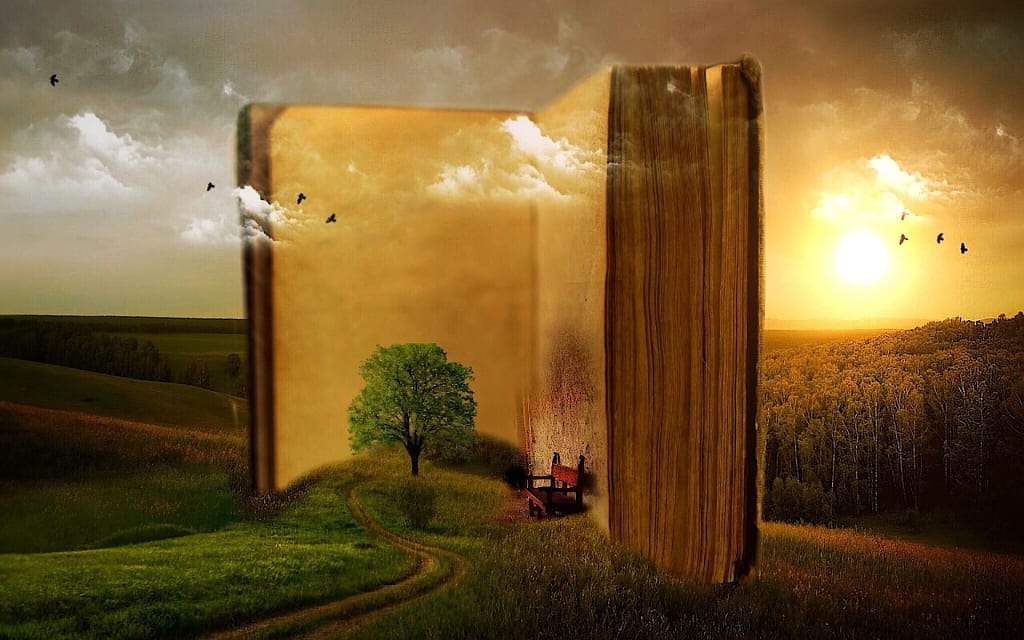
I have written bits and pieces about my journey to writing but not in this much depth. I love talking about this sort of thing because it blows my mind that I actually have my own author story to share. I never thought I would! And I always find it inspiring to read about other people’s adventure into the writing world, so I’m excited that I can contribute.
How it all started
Back in 2009, I had actually tried writing a story before I ever knew anything about writing. It was a story about the fall of Atlantis and it was badly written so I scrapped it. Which I regret because I would love to see the difference in my writing now compared to back then. But deep down I’d always wanted to write, being creative was the only thing I had going for me. I always felt I had never been smart enough or confident enough to do anything else. Creativity was something I was good at, something I was comfortable with. It was something that made me happy and free in a weird way.
Many years after that failed Atlantis story something else happened that led me down the right path of becoming a writer. I can clearly remember the day. It was mid-2014 and I was out having dinner with my friends. The conversation led into T.V. series and my friend told me to watch this one show that he thought I would love. Back then I hated watching a new television series, I have no idea why I’m just a strange little human. So I was reluctant at first, but skip over the complaints and there I was binge-watching this amazing new show. I hadn’t ever been into anything like this before, I could be found watching Friends or Daria on repeat but this, this was different. It made life feel brand new and shiny. I wish I could recreate that feeling again, it was amazing.
Now you’re probably wondering what the hell a television series has to do with writing, just wait for it. Also, can you guess which series I discovered and loved? 10 points for guessing correctly and no cheating!
Back then there were only four seasons out so I finished the series within a few weeks of starting and I was left wanting more. Unfortunately for me, and the rest of the world, the next season wouldn’t be out for another year. That is when I discovered that the show was based on a book series and my mum owned the books, how lucky am I? I was curious and excited but unsure if I could commit. In the past, I had only one or two books that I would read over and over, (wow, I can see a pattern) and I would rarely venture onto anything new unless it was short. But when I skimmed over the pages of these thick beautiful books I was ready and eager to read them all. Seeing the names of favorite characters excited me because I would be able to take a look into their minds and know more about their backstories. I’m sure by now you guessed what series I’m talking about. Yes, that’s right, my new favorite show was the one, the only; Game of Thrones.
My experience as a writer
I began reading the book series and I was hooked. Granted it took me six months to read them all, but I was so obsessed and inspired that I decided I wanted to write my own book. And that is how it started. So, I began jotting down ideas, taking my mum’s ear off about all these characters I had come up with, I had even started writing the outline of the book. Eventually, it got to a point where I actually loved the characters and their backstories, and I loved the story idea that I began writing.
Note: I still have all the documents of that story. I haven’t finished it yet because for a while I lacked confidence in my writing ability. But who knows, I might give it a go again.
During the process, I put my all into this book. With no writing talent or experience, I went ahead anyway. I was confident in myself for the first time. But then, of course, there was a week or two where I became distracted and lost all interest in the book, so much for commitment. I had written 15 thousand words and I wanted to hurry up and end it so I could try to sell it as an eBook. Impatience is the devil! I pushed myself to write another 15 thousand words and I finally ended the book and not very well I might add. I posted it up on kindle like the noob I was. Only two people bought it, so my confidence was low now. I gave up and took down the book and went on to study writing instead. Of course in the meantime, I was writing short stories and just having fun with that, but nothing ever went anywhere. Funnily enough, I thought studying would help my writing, and it did but it also halted my creativity and I didn’t want to write anymore.
So I quit for quite a while. But here I am, writing once again and loving it. Looking back at my path to writing it actually inspires me to start creative writing once more. Maybe I’ll take a little looksie at my awful story and see if it can be fixed.
Thanks for reading. I hope this story gave you a little inspiration for your own writing endeavors. Leave a comment below if you had a similar experience, I’m always fascinated to read about other peoples stories.
Have a great day ❤
Originally posted on Medium
About the Creator
Author’s Advice
If you would’ve asked me 20 years ago did I know I’d become a writer and an author, I would’ve said “nope, ain’t happening”. As fate would have it I did become an author and I can honestly say I’m loving it so far. It really does feel good to be a writer. I’ve learned a lot on this journey and I feel like with even me being as new to this world as I am, there’s some wisdom I need to share with every other aspiring author.
By Joe Patterson14 days ago in Journal
The sunset of global power, the decline of American dominance in the Middle East and the failure of the nuclear defense balance
(Special Analysis: Malik Sarfaraz Hussain Awan - Humanitarian, Social Guardian, Investigative Journalist and Analyst) The geopolitical situation in the Middle East is currently at a critical and strategic juncture where every passing moment is proving to be a harbinger of major changes in the balance of global power. According to the latest data as of March 24, 2026, the recent military confrontation between Iran and Israel has exposed the traditional security structure established in the region for decades to new and multifaceted challenges, the biggest example of which is the recent missile attacks in Tel Aviv, which have forced defense experts to think that even the most advanced defense systems are now proving to be unable to provide complete protection. The situation resulting from these attacks has greatly accelerated diplomatic efforts at the global level, as the recent respite given by Washington and Tehran's strong response to it indicate that the paths of direct dialogue between the two sides currently appear to be blocked and the US This five-day reprieve from the administration is actually the result of the behind-the-scenes diplomatic pressure that is being put on Donald Trump by key stakeholders in the region so that all possible peaceful paths can be tried before any major military action. In the international journalistic context, it is of utmost importance that Washington had sought military and logistical support from all its traditional allies, including NATO, in this crisis, but it has unexpectedly faced a negative response from all fronts because the economies of European and Western countries are already under severe pressure due to President Trump's aggressive decisions, and the growing energy crisis has jeopardized their internal stability, due to which no world power is now ready to directly participate in this unilateral adventure of the United States. President Trump apparently had the naive hope and illusion that the Gulf states would continue to bear their economic losses silently and that the United States and Israel would jointly attack Iranian energy facilities and force Tehran to its knees, but the global scenario is now The situation has completely changed and the Gulf countries have made a strategic decision that they will not plunge their stable economies into a major crisis by jumping into someone else's war. Rather, the important states of the region are now acutely aware that the very America they had considered their protector under defense agreements and had kept at their head for years is now seen as the cause of insecure regional security and pushing them into a situation that will directly benefit only Israel. In this whole situation, the United States has apparently become diplomatically isolated and President Donald Trump is seeing clear difficulties in his political and military strategy because if he declares a ceasefire at this time, America's traditional image as a "superpower" may be affected, and on the other hand, the Zionist state's long-standing plan of "Greater Israel" will also be strategically jeopardized. Israel is currently continuously pressuring the United States to take decisive action against Iran, but the fact is that Washington is currently I feel helpless and have neither a reasonable moral justification for continuing the war for a long time nor the unilateral military superiority that was its hallmark in the past. The United States may make strong statements, but in view of international pressure and Tehran's response capacity, it cannot dare to take extreme steps because all its allies have already abandoned it. In such a situation, if any major military adventure is undertaken, America's own economy and global reputation will be so affected that it may have to return to a decades-old struggle to restore its economic status, from which it will be a difficult stage to emerge again. According to military analysts, if the United States or Israel intend to enter Iran with their ground forces, crossing Iran's geographically difficult borders and gaining a foothold there could prove to be a complex challenge for any modern army because Iran's strategic depth and mountain range provide it with a natural protection for which the only and relatively easy way is through neighboring land borders. But Pakistan, given its current national security priorities and principled stance, cannot jeopardize its stability by becoming a part of any such effort because this action would not only be a political mistake for Pakistan but also a strategic weakness that would severely affect the country's internal and defense structures. Maintaining this balance has become the most difficult diplomatic task in the world at the moment for Islamabad because Pakistan's economy is currently struggling with the tough challenges of agreements with international financial institutions and economic stability, and open support or opposition to any global bloc can have serious economic consequences for it. On the other hand, Pakistan's internal conditions and public sentiment are also deeply connected to neighboring countries, due to which supporting any US military policy for policymakers can create a major internal challenge and public backlash that will be difficult for the state to manage administratively. It is also being recognized at the global level that, unlike in the past, the use of large weapons in today's world isThe threat has become an ideological warning because all major world powers are well aware of the concept of "mutual destruction" and no state can dare to take a step that would threaten its own existence. According to this report, the five-day respite that Pakistan has obtained in this crisis to reduce tensions between Iran and the United States can be called its diplomatic success, but the real challenge is to convince Tehran within these five days on a formula that is acceptable to all parties so that the region can be saved from a major catastrophe whose effects will be felt for generations. Pakistan's policy-making institutions are currently working on a comprehensive strategy through which they can prevent global financial conditions and international commitments from being affected and can also maintain their brotherly and neighborly relations with Iran, but this seems to be a difficult mission because Washington's pressure is constantly increasing and Iran has also sent a clear message with its recent missile attacks that it will not tolerate any economic or military Instead of showing flexibility in the face of pressure, it will defend its sovereignty at all costs. The huge increase in energy prices in the global market and the disruption of maritime trade routes are testimony to the fact that if this crisis is not resolved immediately, its effects will not be limited to the Middle East alone, but the economies of developing countries will be crushed under its burden. The summary of this research analysis is that the unipolar power of the United States is now rapidly transforming into a multipolar world where regional powers have the ability to make their security and economic decisions based on their national interests rather than Washington's, and a geographically important country like Pakistan will have to demonstrate extreme foresight, patience and impartiality in its foreign policy so that it can protect its economic survival and internal sovereignty. This war is no longer being fought only on land or in the air, but it is a psychological and nervous war in which only the side that has the power to impose its conditions on the diplomatic table will be successful. Iran's defense capabilities have proven that conventional military power is now the only decisive factor. No longer, but technological superiority and strategic depth have emerged as the main weapons. The biggest challenge for Pakistan at the moment is to ensure its national security because the country's internal conditions are not in favor of participating in any unnecessary conflict and this is the main point that is preventing the Pakistani authorities from any extraordinary cooperation with the United States. Donald Trump's administration is currently standing in a strategic dead end where it does not see the option of any major action without its close allies and Pakistan is trying to fill this gap, but what will be the cost will be clear at the end of these five days. The modern technology available to Iran has put it in a position where it can target any part of the region and this is the reality that has forced the Gulf states to seriously reconsider the use of their bases and defense cooperation with the United States. This report confirms that Pakistan's diplomatic efforts are currently the only ray of hope for peace in the entire region, but the country's economic needs and fragile financial situation have made the policy The coming days will decide whether Pakistan proves its worth as a global mediator in this most difficult test or whether it falls behind between these two major global powers. In the current geopolitical scenario, maintaining neutrality has become an art for any state, which Pakistan is currently trying with great caution, but the sword of global pressure is constantly hanging, which can come out at any time in the form of economic difficulties or obstacles in financial cooperation. Iran has made it clear that any attack on its territory will be met with a strong response, and this is the same limit that the United States is now hesitant to cross. In this entire scenario, Pakistan's position is that of a state that is economically connected to the global system but is an integral part of the East spiritually, culturally and geographically, and this balance has become the biggest challenge of its foreign policy. According to this analysis, if Pakistan succeeds in bringing Iran to the negotiating table, it will be a major diplomatic path for the Trump administration. Otherwise, A full-scale war could change the map of the entire Middle East, which would have an impact on the entire world and the global economy. Various schools of thought within Pakistan are watching this situation very closely, and in the event of any dubious decision, a wave of public reaction could arise across the country that could prove to be a major challenge for government policymakers. Therefore, Pakistan is making every effort to convert this five-day period into a logical and concrete result so that the region can be saved from a major disaster that threatens global peace. This analytical report concludes that the center of power is now shifting from Washington to regional alliances where important Muslim countries can emerge as a new bloc, provided that they can overcome their internal and economic problems. This is a difficult time for the United States because its traditional allies are no longer unconditionally supporting its every decision, but rather are prioritizing their national interests and survival. This is the fundamental change that will shape the future global order.It will determine the direction of politics and the new structure of the Middle East.
By Malik Sarfraz Hussain Awana day ago in Journal




Comments