
Franchise vs Independent
which model works best in commercial cleaning?
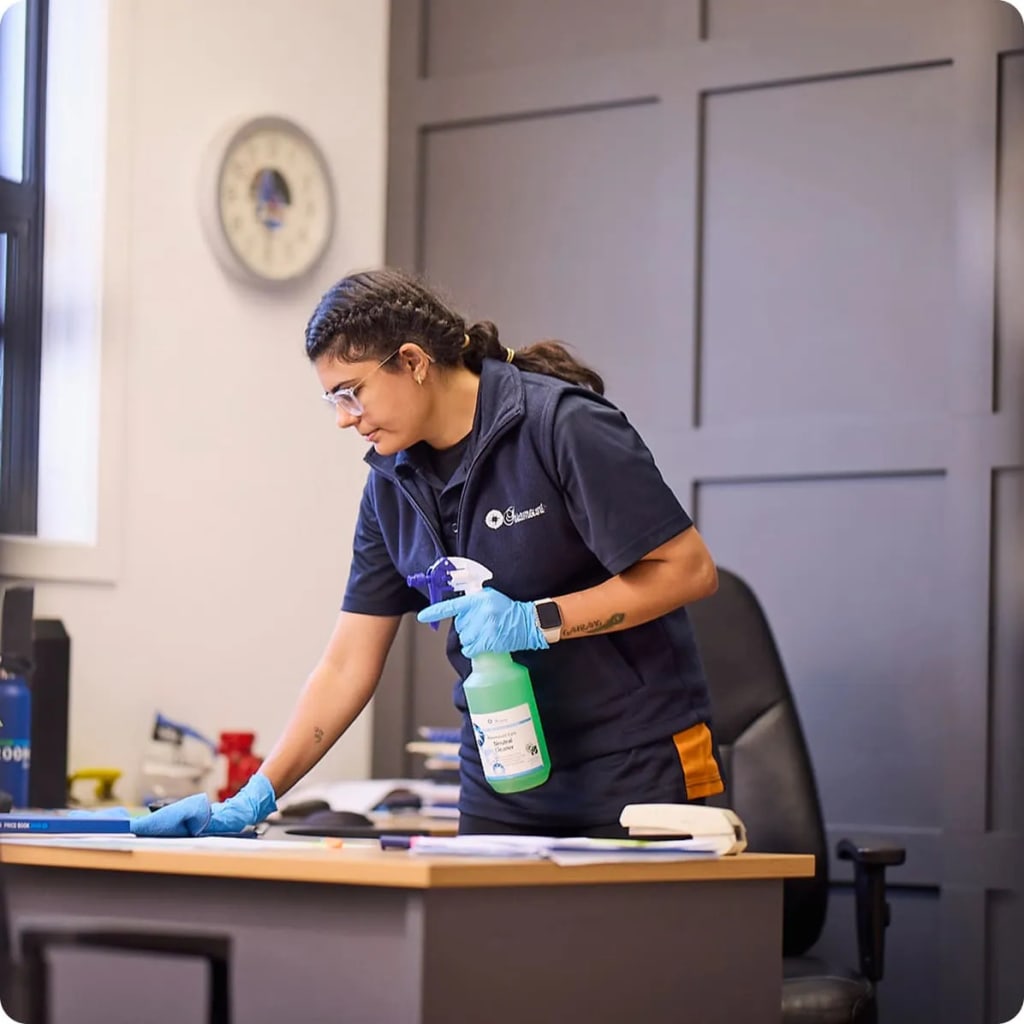
If you’re a business owner, you’ve probably had this moment: you walk into the office early, flick on the lights, and notice the fingerprints on the glass, the bins that didn’t get emptied, and that “is that… a smell?” mystery in the kitchen. It’s not dramatic, but it adds up, especially when staff and customers see it too.
When you decide it’s time to bring in professional commercial cleaning, you’ll usually face two options in New Zealand:
- An independent operator (a local owner-run cleaning business), or
- A franchise network (a national brand with local owner-operators delivering the work)
Both can be excellent. The real difference is how consistent the service is, what happens when things go wrong, and how much admin you want to carry as the client.
Below is a practical Kiwi guide to choosing the model that tends to work best, depending on what you value.
Why this choice matters more in NZ than you might think
Cleaning is often treated like a “simple” service, but it sits right inside workplace expectations. WorkSafe’s guidance on workplace requirements is clear that workplaces should be clean, safe, and well maintained.
On top of that, NZ’s franchise sector is huge. The 2024 Franchising New Zealand Report (Massey Business School) estimated 546 business format franchisors and 27,295 units, with turnover up to $47.2b.
So franchising isn’t some niche model here. It’s how many NZ services deliver national coverage while still being local at the site level.
The independent cleaner model: where it shines
An independent commercial cleaner is usually a business that’s owned and run locally. In many cases, you’ll deal directly with the person who quotes, sets the scope, and checks the work.
Best reasons to choose independent
- Direct relationship with the owner. Decisions can be fast. If you want a change, you ask the person who can do it.
- Flexible, tailored scope. Some independents will happily build a very specific plan around your site and quirks.
- Ideal for single sites. Especially if you’re a small office, a boutique retail space, or a small medical practice with a stable routine.
Common pain points
- Coverage risk. If the cleaner is sick, on leave, or loses staff, there may not be a ready back-up.
- Systems vary. Some independents have tight checklists and QA, others rely more on “we’ll do our best” consistency.
- Scaling can be hard. If you add a second location in another region, you might have to start again with a new supplier.
Independents can be brilliant, especially when you find a strong operator with good processes. The challenge is that quality can vary more between providers because there’s no shared operating system behind them.
The franchise model: why it often wins for businesses
A cleaning franchise network is usually built around a national brand, shared systems, training, and local owner-operators who run their own territory.
What business owners typically get from franchising
1) More predictable quality controls
Franchise systems tend to run set processes, documented scopes, and formal quality checks. That matters when you want fewer surprises and less time managing the supplier relationship.
2) Built-in back-up
If your regular cleaner is unavailable, a network can often shift resources faster than a single operator can.
3) Easier multi-site delivery
If you have two or more premises, franchising can reduce admin. You may get one framework for reporting, billing, and service standards, even if different local teams are doing the work.
4) A more accountable escalation path
With an independent, your “escalation” is usually the same person you already spoke to. With a franchise, you often have both the local operator and a wider support structure.
The trade-offs to be aware of
- Less “anything goes” flexibility. Good systems help quality, but they can make unusual requests slower to implement.
- Not all franchises are equal. A strong network with real QA and support is very different from a brand name with little oversight.
- Local operator still matters. A franchise is only as good as the people servicing your site, so checks and references still matter.
Even with those caveats, franchising tends to be a strong fit for business owners who want cleaning to become “invisible” again, meaning it’s handled, consistent, and not taking up headspace.
A real NZ example: what scale and systems look like in practice
Paramount Cleaning is one of the clearest case studies of how the franchise model works at scale in Aotearoa.
They have a nationwide network of 220+ franchisees, a workforce of around 1,600, and service coverage across 5,100+ locations. They’ve been operating for 45 years and work with businesses, councils and government agencies.
On the franchising side, they also highlight performance signals you don’t often see published openly: many franchisees generating over $1m annual revenue, with the largest reaching $2m. That level of maturity usually means a lot of the operational headaches have already been solved through systems and experience.
They’ve also been recognised in NZ franchising awards, including the Westpac Supreme Franchise System of the Year (with wins noted in 2008, 2015 and 2018). And on the compliance side, they state ISO certifications for quality and environmental management (ISO 9001 and ISO 14001).
A quick note on “biggest”: Paramount’s own story page says IBISWorld ranks them as the fourth largest cleaning company in NZ. So while they clearly operate one of the largest franchise networks by footprint and franchisee count, “largest company overall” depends on how the industry is measured.
So which model works best?
Here’s a simple way to decide, based on what usually matters most to Kiwi business owners.
Choose an independent cleaner if you want:
- A hands-on owner relationship
- A single site with stable needs
- Highly customised requests and quick informal changes
- A supplier you already trust locally
Choose a franchise network if you want:
- Consistent delivery across weeks and months
- Clear processes, QA, and reporting
- Cover for leave, illness, and staffing changes
- Multi-site cleaning without juggling multiple suppliers
- A proven system that reduces risk
In most cases, franchising is the safer default for businesses that don’t want cleaning to become a recurring management task. You’re not just buying labour. You’re buying a system that’s meant to keep the standard steady, even when real life happens.
A practical tip before you sign anything
Whatever model you choose, ask two questions:
- “How do you prove the work is being done to scope?” - Look for checklists, inspections, photos, surveys, or documented QA.
- “What happens if the usual cleaner can’t attend?” - The answer tells you a lot about service continuity.
About the Creator
Keep reading
More stories from Your NZ Local and writers in Journal and other communities.
The Use of Timber Veneer in Commercial Fitouts
Walk through almost any new workplace, hotel lobby, or education fitout in New Zealand or across the World and you will see it: warm timber grain on joinery fronts, wall panelling, reception desks, and feature ceilings. Veneer is back in a big way, partly because it looks premium, and partly because it lets teams achieve “real timber” character without the cost, weight, and movement risk of solid timber everywhere.
By Your NZ Local19 days ago in Journal
Author’s Advice
If you would’ve asked me 20 years ago did I know I’d become a writer and an author, I would’ve said “nope, ain’t happening”. As fate would have it I did become an author and I can honestly say I’m loving it so far. It really does feel good to be a writer. I’ve learned a lot on this journey and I feel like with even me being as new to this world as I am, there’s some wisdom I need to share with every other aspiring author.
By Joe Patterson6 days ago in Journal
The Interactive Shift: Exploring the Future of Storytelling in Digital Age
The Interactive Shift: Exploring the Future of Storytelling in Digital Age For centuries, storytelling was a one-way street. We sat around campfires, listened to bards, turned the pages of novels, and watched silver screens. In these scenarios, the creator was the architect, and we—the audience—were the passive observers. We cried for characters we couldn't warn and cheered for heroes we couldn't help. But we are currently standing at a massive crossroads in cultural history.
By Muhammad Owais SEO5 days ago in Journal
A System That Isn’t Working Challenge Winners
Systems promise order. They organize behavior, distribute opportunity, and suggest that if everyone follows the rules, things will work. The entries in A System That Isn’t Working look closely at what happens when that promise begins to slip.
By Vocal Curation Team6 days ago in Resources



Comments
There are no comments for this story
Be the first to respond and start the conversation.