

by Futoshi Tachino
What Changed
Heating is undergoing a subtle revolution. In 2022, global sales of electric heat pumps jumped by 11% – the second year in a row of double-digit growth amid high fuel prices and new incentives [1]. Europe led the charge with nearly 3 million heat pumps sold in 2022 (an almost 40% increase from the prior year) [1]. For the first time, Americans also bought more heat pumps than gas furnaces: U.S. heat pump purchases topped 4 million units in 2022, narrowly eclipsing the sales of gas-fired furnaces that year [2]. This milestone was reached even before many new U.S. incentives kicked in, marking a quiet shift in how homes are heated across the country [2].
Policy shifts have accelerated this trend on both sides of the Atlantic. In response to the energy crisis spurred by Russia’s invasion of Ukraine, the European Commission unveiled its REPowerEU plan in 2022, aiming to double the deployment rate of heat pumps. This initiative targets an extra 10 million heat pump installations in the next five years and a total of 30 million by 2030 – effectively reaching about 60 million cumulative units in use across the EU by that year [3]. To support this rapid scale-up, most EU member states now offer generous rebates and subsidies for heat pump adoption. Many countries have even set timelines to ban new oil or gas heating systems, signaling that electric heat is becoming the default for future homes. Likewise in the United States, the Inflation Reduction Act of 2022 introduced unprecedented support for building electrification – including federal tax credits up to $2,000 for heat pump installations and upfront rebates up to $8,000 for low-income households that switch to electric heating [2]. These incentives are quietly making heat pumps more financially attractive and accessible, softening the upfront cost barrier that once deterred many consumers.
Technology improvements have also changed the game. Modern heat pumps can operate efficiently in cold climates, overturning the old notion that they only work in mild weather. Advanced “cold-climate” models continue extracting heat from frigid air, allowing them to replace furnaces even in snowy winters. As a result, some of the chilliest countries are now among the biggest adopters of heat pumps. In Norway roughly 60% of buildings are heated by heat pumps, and in Sweden and Finland over 40% – undercutting the argument that electric heat can’t handle cold temperatures [4]. This quiet progress has been building for years: the Nordic region embraced heat pumps early on, and manufacturers have steadily improved performance and reliability. Today’s units are not only more powerful in the cold; they’re also much quieter and easier to install than earlier generations. From suburban America to rural Europe, one might hardly notice that basement boilers and backyard oil tanks are being retired – replaced by sleek electric systems humming softly in the background. The electrification of heat is well underway, even if it isn’t splashed across headlines as often as electric cars or solar farms.
Why It Matters
Heating our buildings is one of the largest pieces of the energy and climate puzzle. In fact, supplying heat (for space heating, hot water, and industry) accounts for roughly 40% of global energy-related CO₂ emissions – nearly as much as all electricity generation worldwide [5]. This means that decarbonizing heat is absolutely crucial for meeting climate goals. Replacing a fossil-fuel furnace or boiler with an electric heat pump immediately cuts direct carbon emissions from that building to zero. And as the electricity grid gets cleaner with each passing year, the climate benefits of electric heating only grow. The International Energy Agency estimates that to align with countries’ existing climate pledges, heat pumps will need to provide about 20% of global heating needs by 2030 (up from roughly 10% today) – and an even faster ramp-up (on the order of 15%+ sales growth each year) would be required to get on track for net-zero emissions by 2050 [1]. In other words, quietly swapping out millions of furnaces for heat pumps over the next decade is a critical step toward our climate targets.
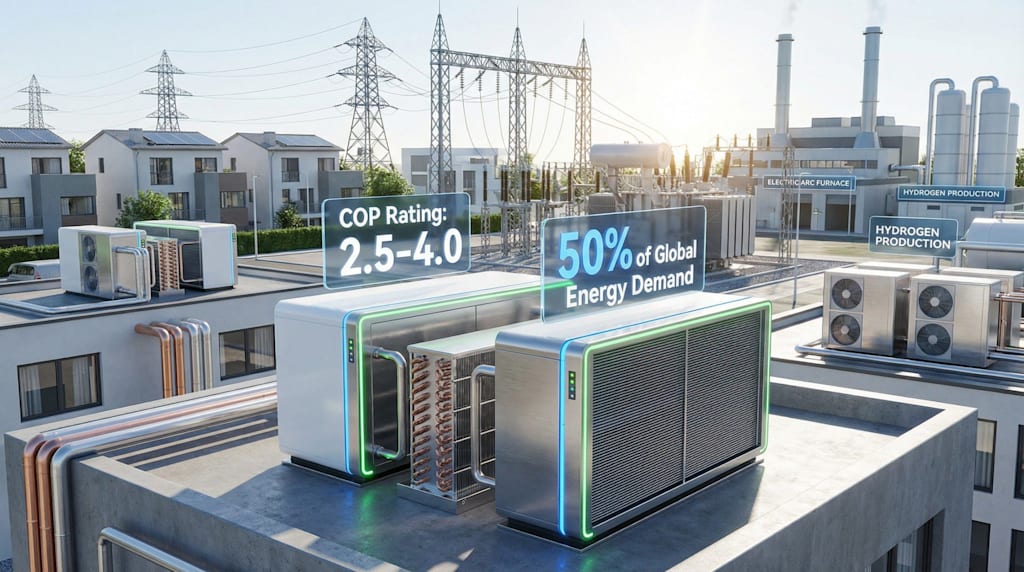
Beyond the long-term climate impact, electrifying heat delivers more immediate benefits as well. Heat pumps are extremely efficient – often 3 times more efficient (or more) than traditional combustion heating systems – because they move heat instead of burning fuel [2]. By using refrigeration technology to concentrate and transfer ambient warmth, a heat pump can deliver 3–5 units of heat for each unit of electricity it consumes. This super-charged efficiency means lower overall energy use and cheaper heating bills for consumers, especially compared to electric resistance heaters or old gas furnaces. It also means that as we switch to electric heat, the total energy needed to keep everyone warm decreases substantially, easing the strain on energy supplies.
Crucially, the “quiet” electrification of heat is a win for public health and safety. Eliminating on-site combustion in furnaces and stoves leads to cleaner air both inside and outside the home. Gas and oil heating equipment emit pollutants like nitrogen oxides and particulate matter; heat pumps emit none. Families that transition to all-electric heating (and cooking) immediately benefit from improved indoor air quality and lower risks of carbon monoxide leaks or gas fires. On a larger scale, widespread adoption of heat pumps helps cut urban air pollution – especially when they replace older, dirty oil or coal-based heating systems [1]. And by reducing reliance on imported natural gas or heating oil, countries also gain a measure of energy security; homes and businesses become less vulnerable to fossil fuel price spikes or supply disruptions. The events of recent years – from geopolitical conflicts to volatile gas markets – have underscored the value of this resilience. Every new heat pump quietly chips away at the demand for fossil fuels, strengthening the stability of our future energy system.
Finally, electrifying heat can significantly shrink our carbon footprint in a relatively short time. According to the IEA, accelerating heat pump deployment in line with national climate commitments could avoid about 500 million metric tons of CO₂ emissions per year by 2030 – roughly equivalent to the annual emissions of all Germany [4]. This is a climate solution that scales: each individual home or building that upgrades to a heat pump makes a small cut in emissions, and collectively these cuts add up fast. In combination with cleaner electricity, electrified heating enables deep decarbonization of buildings – a sector that has historically been tough to green. Importantly, this transition doesn’t ask people to sacrifice comfort; heat pumps actually improve comfort for many, since the same device provides efficient air conditioning in summer and steady, even warmth in winter. In sum, the quiet electrification of heat addresses multiple problems at once: reducing greenhouse gases, lowering energy waste, improving air quality, and empowering consumers to take control of their energy usage. It’s a foundational piece of the broader clean-energy transition, deserving of as much attention as the more high-profile shifts to electric cars and renewable power.
Conclusion
Over the course of this ten-part series, we have explored a range of under-the-radar transformations propelling the world toward a more sustainable future – from cleaner transportation and greener electricity to changes in industry and land use. The electrification of heat exemplifies the common thread running through all these stories: meaningful change is often happening quietly, in the background, driven by steady advances in technology and policy rather than splashy headlines. Together, these ten narratives show that the fight against climate change isn’t confined to global conferences or dramatic events; it’s being won step-by-step through the cumulative impact of countless modest improvements. The quiet replacement of a million gas boilers with heat pumps, or the incremental boosts in efficiency and innovation year after year, add up to profound shifts in our energy landscape. Individually, each trend might seem small – a heat pump in a basement here, a solar panel on a rooftop there – but collectively they are steering us onto a new path. As we conclude this series, the takeaway is an optimistic one: the transition to a cleaner, safer, and more efficient world is already well underway, propelled by these quiet revolutions that are making a big difference behind the scenes.
References
[1] Monschauer, Yannick; Delmastro, Chiara; and Martinez-Gordon, Rafael (2023, March 31). “Global heat pump sales continue double-digit growth.” International Energy Agency – Commentary. Retrieved from IEA website: https://www.iea.org/commentaries/global-heat-pump-sales-continue-double-digit-growth
[2] Olano, Maria Virginia (2023, February 10). “Chart: Americans bought more heat pumps than gas furnaces last year.” Canary Media. Available at: https://www.canarymedia.com/articles/heat-pumps/chart-americans-bought-more-heat-pumps-than-gas-furnaces-last-year
[3] European Commission (2022, May 18). “REPowerEU: A plan to rapidly reduce dependence on Russian fossil fuels and fast forward the green transition.” Press Release IP/22/3131. Brussels: European Commission. URL: https://ec.europa.eu/commission/presscorner/detail/en/ip_22_3131
[4] International Energy Agency (2022, November). “The Future of Heat Pumps.” IEA Report (Executive Summary). Retrieved from IEA website: https://www.iea.org/reports/the-future-of-heat-pumps
[5] International Energy Agency (2024). “Renewables 2023 – Analysis: Heat.” IEA Report (Global Heat Chapter). Retrieved from IEA website: https://www.iea.org/reports/renewables-2023/heat
About the Creator
Futoshi Tachino
Futoshi Tachino is an environmental writer who believes in the power of small, positive actions to protect the planet. He writes about the beauty of nature and offers practical tips for everyday sustainability.
Keep reading
More stories from Futoshi Tachino and writers in Earth and other communities.
Oil Shock, Solar Surge
This conflict-driven oil shock (Feb–Mar 2026) closed the Strait of Hormuz and cut about 25% of global oil and gas supplies[1]. Prices spiked (Brent ~$100) and Gulf fields shut in[2]. Experts say this crisis proves why renewable energy (solar, wind, batteries, hydrogen) must now be fast-tracked to secure power and cut emissions[3][1].
By Futoshi Tachino17 days ago in Earth
Waste Tire Pyrolysis and Hazardous Waste Classification
Policy Context of Waste Tire Management End-of-life tires (ELTs) represent a persistent challenge within solid waste governance frameworks. Their complex composition—comprising synthetic rubber, carbon black, steel, and various chemical additives—renders conventional disposal methods such as landfilling increasingly untenable. Consequently, thermochemical conversion technologies, particularly those deployed in a pyrolysis plant, have gained traction as an alternative valorization pathway.
By Wayne Shenabout 21 hours ago in Earth
Watching The End Of The World From The Diner
Introduction I am not sure how to approach this. Guy Peellaert was an amazing artist who created iconic fantasy images of famous people, usually musicians or politicians, as well as creating commissioned album covers such as "It's Only Rock'n'Roll" by The Rolling Stones and David Bowie's "Diamond Dogs" which you can read more about below.
By Mike Singleton 💜 Mikeydred 6 days ago in Art



Comments
There are no comments for this story
Be the first to respond and start the conversation.